Japan is easily one of the safest, most rewarding travel destinations in the world. However, arriving with outdated assumptions can quickly turn a dream vacation into an exhausting ordeal—getting trapped at train ticket gates, locked out of fully booked attractions, losing hundreds of dollars on currency conversion markups, or accidentally breaching local etiquette.
Social media highlights look effortless, but real-world travel requires practical logistics. Below are the 14 critical mistakes international travelers frequently make in Japan, paired with the exact strategies to avoid every single one.
Itinerary & Pre-Trip Planning
The East-to-West Over-Scheduled Itinerary
Packing too many distant neighborhoods into a single day will drain your energy fast. A classic rookie itinerary looks like this: Asakusa in the morning, Shibuya in the afternoon, Akihabara before sunset, and Shinjuku for dinner.
While Tokyo looks compact on a map, walking through massive multi-level transit terminals, waiting for train transfers, and wading through crowds takes substantial time.
- The Local Strategy: Group your Tokyo days geographically into East Side (Asakusa, Ueno, Ginza, Tsukiji, Akihabara) and West Side (Shibuya, Shinjuku, Harajuku, Nakameguro).
- The Golden Rule: Cap your daily priorities at two or three core areas to leave room for spontaneous exploration.
Underestimating Summer Humidity & Peak Seasons
Japan’s weather and holiday calendars can humble unprepared visitors.
- Summer (July & August): Temperatures consistently hit 35°C (95°F) paired with 80% humidity that traps body heat. Pack UV parasols, cooling wipes, and drink electrolyte beverages like Pocari Sweat.
- Golden Week (Early May): Domestic travel surges, hotel rates skyrocket, and popular sites experience multi-hour queues. Avoid high-mileage transit routes during this week unless accommodations and tickets were secured months ahead.
- Rainy Season (June): Expect consistent downpours; keep a compact umbrella and waterproof shoes on hand.
Assuming You Can “Just Walk In” to Popular Spots
Major observation decks, immersive art exhibits, themed dining, and renowned sushi counters rarely have same-day tickets waiting at the door.
- Advance Booking Essentials: Destinations like SHIBUYA SKY (especially sunset slots), teamLab Planets, the Ghibli Museum, and top-tier dining sell out weeks or months ahead.
- The Fix: Identify your non-negotiable attractions before departure and set calendar reminders for the exact date and hour their online reservation windows open.
Blindly Buying the Nationwide JR Pass
Many travelers still assume the nationwide Japan Rail (JR) Pass is an automatic money-saver. Following major price revisions, a 7-day nationwide pass rarely pays off unless you are aggressively traveling across three or more distant regions in a single week.
- Individual Shinkansen Tickets: For a standard Tokyo–Kyoto–Osaka round trip, buying point-to-point Shinkansen tickets is far more economical.
- Osaka to Kyoto Commuting: Take local Special Rapid commuter trains (around 570 JPY / ~30 minutes) instead of paying high fares to transfer between bullet train stations.
Relying Solely on Public Wi-Fi
Public city Wi-Fi in Japan typically requires cumbersome portal logins, delivers spotty coverage, and drops out the moment you start walking. Landing without active data makes pulling up Google Maps, navigating train platforms, or communicating with hotels nearly impossible.
- The Solution: Install an eSIM on your smartphone before departing so your phone automatically connects to local networks upon landing, or pre-order a pocket Wi-Fi router for terminal pickup.
Transit, Navigation & Luggage
The IC Card Trap & The Gate Freeze
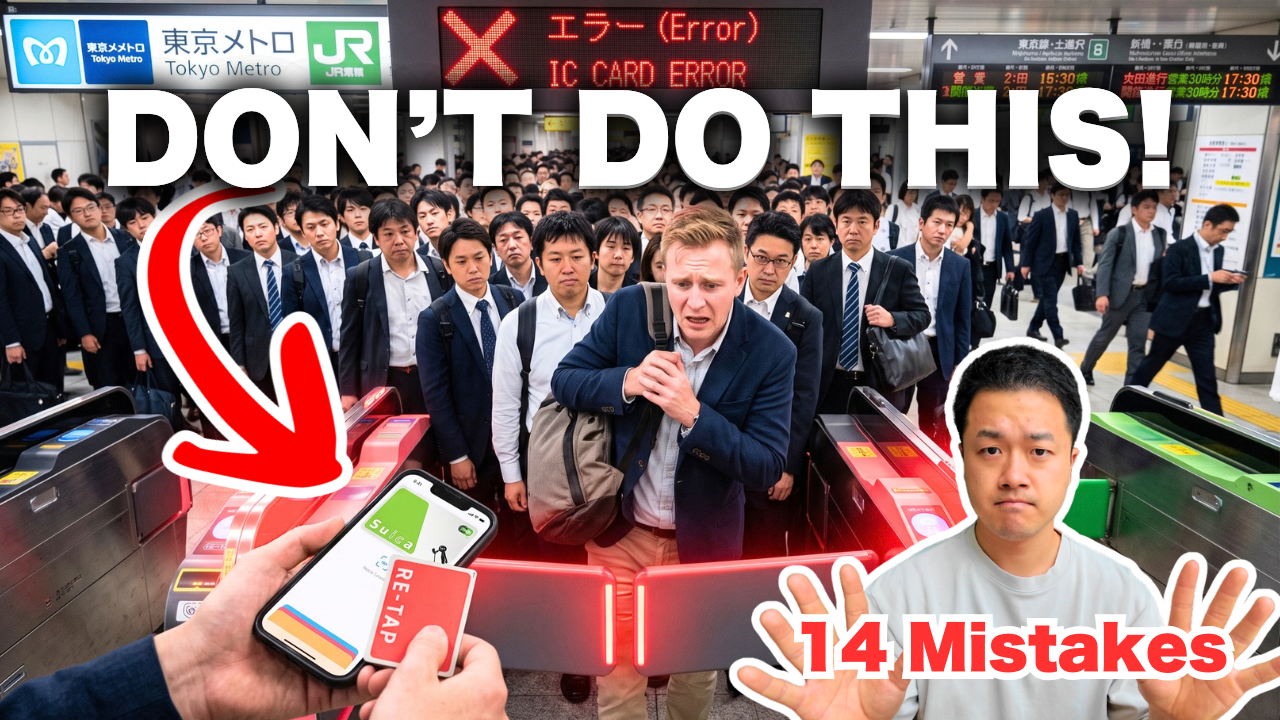
Adding a digital Suica or Pasmo to your Apple Wallet makes subway transit effortless. However, a common technical issue catches visitors off guard: many foreign-issued Visa credit cards get flagged and blocked by fraud systems when reloading transit cards via Apple Wallet.
- What Happens at the Gate: Tokyo ticket gates process multiple commuters per second during rush hour. When a card declines, gates flash red and snap shut.
- The Rule: If your card errors, never stand in the turnstile repeatedly tapping your phone while a line forms behind you. Step aside immediately outside the gate line.
- The Prevention: Use a Mastercard or American Express card to reload your digital card, or top up with physical cash at station ticket kiosks before approaching the turnstiles.
Dragging Giant Suitcases on Public Transit
Hauling oversized luggage up historic station stairwells, onto crowded subway cars, and through narrow buses causes immense physical fatigue and blocks daily commuters.
- Shinkansen Baggage Regulations: Bringing luggage with total dimensions (length + width + height) exceeding 160 cm onto the Tokaido Shinkansen requires an advance reservation for dedicated oversized baggage seats.
- Luggage Forwarding (Takkyubin): Use services like Yamato Transport to send heavy bags from the airport directly to your hotel (or between hotels) for roughly $15 to $20 per suitcase, letting you travel completely hands-free.
🗺️ Need Turnkey Routes & 1-Tap Google Maps Pins?
Check out our complete 119-page handbook crafted by a Tokyo native—featuring 5-day itineraries and offline navigation.
See What’s Inside the Guidebook →Dining, Money & Tax-Free Shopping
Blindly Trusting Google Maps 4.5 Stars
In Western countries, a 4.5-star Google Maps score usually signals an extraordinary restaurant. In Japan, high Google ratings often simply reflect heavy English marketing or viral social media popularity among international tourists.
- The Tabelog Curve: Japanese locals use Tabelog, where scoring is mathematically calculated on a strict bell curve. A score of 3.5 or higher places a restaurant in the top tier nationwide, while 3.8 and above indicates legendary culinary status.
- Japanese Dining Chains: Instead of wasting two hours waiting in an internet-famous ramen queue, explore Japan’s exceptional dining chains (teishoku set meals, tempura, gyudon). They deliver world-class consistency, fast service, and unbeatable prices with zero waiting.
Becoming a “Breakfast Orphan”
Walking out of your hotel at 7:00 AM expecting bustling artisan bakeries and breakfast cafes often leads to empty streets. In Japan, standard cafes and retail stores rarely open their doors before 10:00 or 11:00 AM.
- How to Find Breakfast: Look for traditional retro coffee shops (kissaten) offering classic “Morning Sets” (thick buttered toast, boiled eggs, and coffee), explore historic morning fish markets, or pick up fresh handcrafted onigiri from specialty morning counters.
Airport Currency Exchanges & The Cashless Myth
Exchanging paper currency at airport kiosks or tourist exchange booths leads to steep conversion rate markups. Conversely, assuming Japan has gone 100% cashless is just as risky—small ramen ticket machines, shrine donation boxes, historic izakayas, and coin lockers still run strictly on cash.
- The ATM Hack: Walk into any 7-Eleven and use the Seven Bank ATM. Insert your foreign debit or credit card to withdraw Yen directly.
- On-Screen Selection: When the ATM screen asks whether to settle in your home currency or Japanese Yen, always select JPY (Japanese Yen) to ensure you get the clean interbank exchange rate rather than an inflated dynamic conversion rate.
Fragmenting Purchases & Opening Tax-Free Bags
Japan offers a 10% tax exemption on purchases over 5,000 JPY (pre-tax) at participating tax-free stores. Buying small 1,000 JPY souvenirs across multiple independent shops forfeits your eligibility.
- Consumable Goods Rule: Tax-free consumables (skincare, cosmetics, snacks, medicine) are sealed at checkout in clear, tamper-evident plastic bags.
- Customs Enforcement: Under Japanese law, these sealed bags cannot be opened while inside Japan. If customs checks your luggage at airport departure and finds broken seals, you will be required to pay the 10% tax back immediately.
- Best Practice: Keep items intended for hotel snacking or daily use on a separate, taxed receipt so you can open them freely.
Etiquette, Respect & Local Laws
Wearing Strong Fragrances to Meals
Wearing strong perfume or cologne can lead to being turned away at high-end sushi bars, tempura counters, and kaiseki establishments.
- The Reason: Traditional Japanese dining relies heavily on delicate aromatic nuances—subtle dashi steam, freshly grated wasabi, and natural hinoki cypress wood counters. Strong artificial scents overwhelm the room for both the chef and fellow diners.
- The Rule: Opt for unscented toiletries when dining out or riding packed commuter trains.
Expecting Street Trash Cans & Eating While Walking
Street trash cans were removed from public city spaces decades ago. The small receptacles beside beverage vending machines are strictly intended for aluminum cans and plastic bottles—never personal food waste.
- Carry a Bag: Always keep a small plastic bag in your daypack to hold personal trash until you return to your hotel room or locate a convenience store bin.
- Eating While Walking (Aruki-gui): In historic pedestrian corridors (such as Asakusa’s Nakamise Street or Kyoto’s market alleys), walking while eating is prohibited. Finish your street snack directly in front of the shop where you bought it, dispose of the skewer or wrapper in their counter bin, and then resume walking.
Public Transport Quiet, Shrines, and Medication Laws
- Trains: Commuter cars are shared quiet zones. Switch smartphones to silent mode, avoid phone calls completely, and keep conversations low.
- Shrines and Temples: Walk along the outer edges of approach pathways rather than directly down the center (traditionally reserved for deities). Always rinse your hands at the water purification pavilion before praying.
- Onsen Etiquette: Wash and rinse your entire body thoroughly at the seated wash stations before entering the communal hot springs.
- Over-the-Counter Medications: Certain common Western cold remedies, allergy medications, and inhalers containing pseudoephedrine or specific stimulants are strictly controlled or illegal in Japan without advance government import permits. Verify ingredients before packing.
Final Thoughts
Avoiding these 14 common traps allows you to travel smoothly, save hours of unnecessary waiting, and experience Japan with complete peace of mind.
Which of these tips surprised you the most, or which have you encountered on past travels? Leave a comment below, and have a safe, unforgettable journey to Japan!


Comments