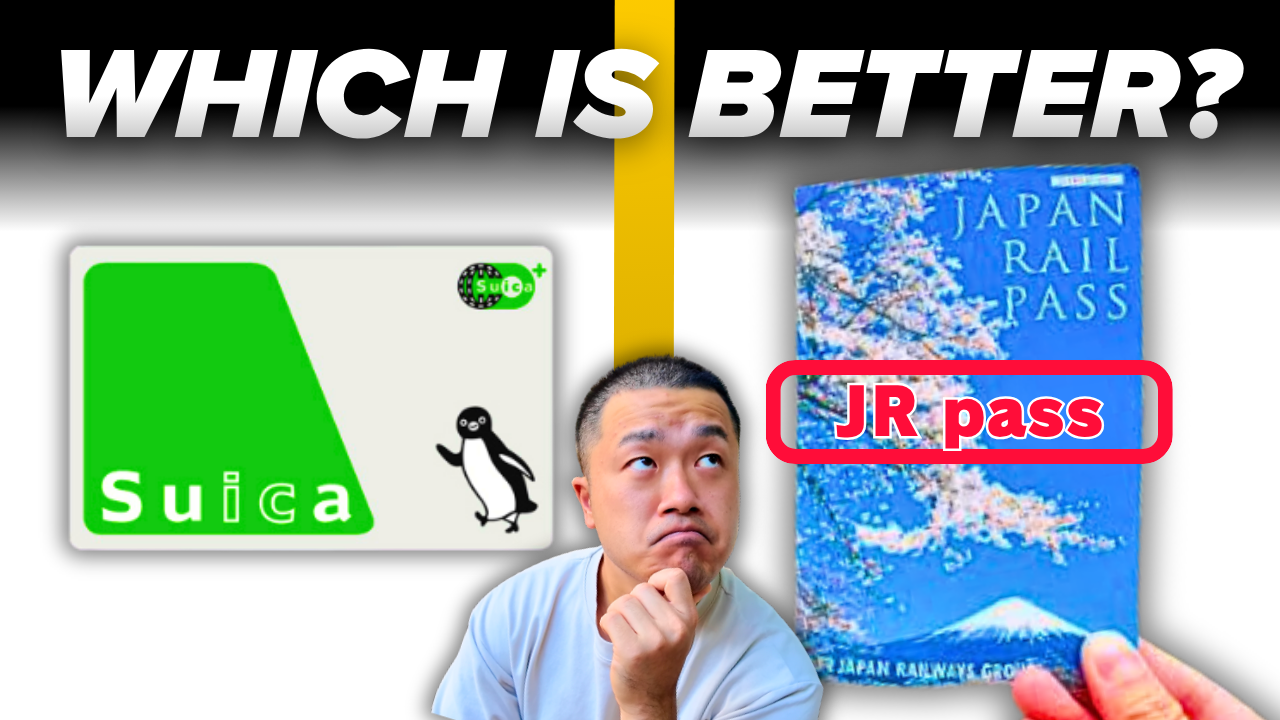
Planning a trip to Japan? If you’ve been browsing older travel blogs, Reddit threads, or YouTube guides, you’ve almost certainly seen this classic piece of advice:
“Just buy a 7-day Japan Rail Pass—it’s the ultimate travel hack.”
For over a decade, that was 100% true. But following that advice blindly today could cost you hundreds of dollars in wasted travel budget.
Ever since the massive 65% to 70% price hike, the fundamental math behind traveling across Japan has completely flipped. In this guide, we break down the cold, hard numbers between the JR Pass and IC Cards (Suica / PASMO), and give you an actionable decision matrix so you never pay a dollar more than you have to.
The Pure Cost Math: The Break-Even Reality
Let’s look directly at the numbers.
Currently, a standard 7-day Ordinary JR Pass costs roughly ¥50,000 (approx. $330–$350 USD depending on exchange rates).
To make that ¥50,000 investment worth your money, you can no longer rely on the classic “Golden Route” round-trip between Tokyo, Kyoto, and Osaka.
The Tokyo–Kyoto Math Trap:
- One-way Shinkansen (Bullet Train) Tokyo ➔ Kyoto: ~¥14,000
- Round-trip Tokyo ➔ Kyoto ➔ Tokyo: ~¥28,000 – ¥30,000 (including local transit)
- 7-Day JR Pass Cost: ¥50,000
- Result: You are literally burning ¥20,000+ ($130+ USD) on fire.
When does a JR Pass actually break even today?
You need an intensely aggressive, fast-paced sprint. For example:
$$\text{Tokyo} \rightarrow \text{Kyoto} \rightarrow \text{Hiroshima} \rightarrow \text{Kanazawa} \rightarrow \text{Tokyo}$$
…all tightly packed within a single 7-day window.
If your goal is to spend 10 to 14 days relaxing and exploring Tokyo, Kyoto, and Osaka at your own pace, buying a JR Pass is a complete financial waste.
Convenience & Speed Penalties You Didn’t Know About
Beyond the price tag, there is a massive convenience penalty that most first-time visitors overlook: Network limitations.
❌ No Free Access to the Fastest Bullet Trains
The JR Pass does NOT give you standard access to the fastest and most frequent Shinkansen services—the Nozomi and Mizuho. To ride these high-speed trains, JR Pass holders are forced to pay a hefty extra surcharge. Otherwise, you are restricted to slower trains (like the Hikari or Kodama) with more stops and longer wait times.
❌ JR Lines Only (The “Double Tax” Problem)
The JR Pass only works on JR-operated lines. It does not cover:
- Municipal subways (Tokyo Metro, Toei Subway, Osaka Metro, Kyoto Subway)
- Major private railway networks (Hankyu, Keihan, Kintetsu, Odakyu)
Even if you drop ¥50,000 on a JR Pass, you will still need an IC card (Suica or PASMO) just to take the subway across town. In practice, you end up paying a “double transit tax” every single day.
The Modern Solution: Digital IC Cards + SmartEX
So, if the JR Pass is no longer the default answer, what is the modern, friction-free alternative?
Enter the Digital IC Card ecosystem (Suica / PASMO) combined with the SmartEX app.
Why Digital Suica Wins:
- Instant Apple Wallet Setup: If you use an iPhone, you don’t even need to stand in line at the airport. You can add a digital Suica directly to your Apple Wallet before leaving home.
- Apple Pay Top-Ups: Recharge instantly on your phone anytime, anywhere.
- Universal Tap-and-Go: Works seamlessly across virtually every train, subway, city bus, convenience store, and vending machine nationwide.
How to Ride the Bullet Train Without a Paper Ticket:
Use the official SmartEX app (or smart-ex.jp).
- Book your individual Shinkansen seat on your phone (often with early-bird discounts).
- Link the ticket directly to your digital Suica or physical IC card ID number.
- Simply tap your phone at the Shinkansen gates. No paper tickets, no line-waiting at ticket counters.
The Decision Matrix: JR Pass vs. Digital Suica
Use this quick cheat sheet to make your decision foolproof:
| 🔴 BUY A JR PASS IF… | 🔵 USE A DIGITAL SUICA IF… |
| • Hitting 3+ distant regions in 7 days (e.g., Tokyo ➔ Hiroshima ➔ Kanazawa) | • Traveling the classic Tokyo, Kyoto, & Osaka route |
| • Very fast-paced, high-mileage schedule | • Spending 7 to 14+ days at a relaxed pace |
| • Taking multiple spontaneous long-distance day trips | • Using city subways, private railways, and local buses |
| • Total individual bullet train fares exceed ¥50,000 | • Want 100% frictionless tap-and-go mobility |
🗺️ Need Turnkey Routes & 1-Tap Google Maps Pins?
Check out our complete 119-page handbook crafted by a Tokyo native—featuring 5-day itineraries and offline navigation.
See What’s Inside the Guidebook →The “Welcome Suica” Reality Check
You’ve probably seen the red “Welcome Suica” marketed to tourists. Many assume it’s a better deal because there is no ¥500 deposit required up front.
Be careful: That is an illusion.
| Feature | 🟢 Regular Green Suica | 🔴 Welcome Suica (Red) |
| Deposit | ¥500 required up front | ¥0 (Zero deposit) |
| Validity | 10 Years (Great for return trips) | Expires strictly in 28 Days |
| Refunds | Deposit & leftover balance are refundable | 100% NON-REFUNDABLE |
⚠️ Warning: If you leave ¥2,000 on a Welcome Suica when you fly home, that money is gone forever.
Who should actually get a Welcome Suica?
- Android Users (Purchased Outside Japan): Foreign Android devices do not support digital Suica or PASMO due to hardware chip standards (Osaifu-Keitai). A physical card is required.
- The “Time-Saver” Traveler: Returning a regular Suica on your departure day means waiting in long airport refund lines just to get ¥500 back. If you don’t want the hassle and plan to spend down your balance to ¥0 at airport shops, the Welcome Suica is convenient.
Step-by-Step Purchase Blueprint
Avoid scams and multi-hour airport queues with these step-by-step instructions.
Option A: If You Are Buying the JR Pass
- Purchase Officially: Buy directly from the official website (japanrailpass.net). Avoid third-party resellers unless they offer significant discounts, as official purchases let you reserve seat numbers online in advance.
- Collect in Japan: Head to a JR East Travel Service Center or an automated passport-reading ticket kiosk at Narita, Haneda, or Tokyo Station. Scan your QR code and passport to print the pass.
Option B: If You Choose the Digital Suica Route (Recommended)
- iPhone Users:
- Open Apple Wallet ➔ Tap “+” ➔ Select Transit Card ➔ Search “Suica” or “PASMO”.
- Top up using Apple Pay (Mastercard or AMEX are recommended, as foreign Visa cards can occasionally be declined).
- Ready to tap before your plane even touches down!
- Android Users & Physical Card Seekers:
- Purchase a physical Welcome Suica or standard IC Card at airport train stations (Narita / Haneda) using dedicated vending machines.
- Troubleshooting stockouts: If airport machines are sold out due to semiconductor shortages, head to a Tokyo Metro subway station and purchase a PASMO card instead. Functionally, PASMO and Suica are 100% interchangeable across Japan.
- Booking Shinkansen (Bullet Trains):
- Download the SmartEX app (or use smart-ex.jp).
- Register your credit card, purchase your point-to-point Shinkansen ticket, and enter your IC Card number to link them.
- Tap your phone or IC card directly through the Shinkansen turnstiles.
Final Thoughts
Traveling Japan in the post-price-hike era requires working smarter, not harder. For 85%+ of travelers, skipping the JR Pass and combining a Digital Suica / PASMO with SmartEX point-to-point tickets is not only significantly cheaper—it’s a far smoother travel experience.
Safe travels, and enjoy your time in Japan!

Comments