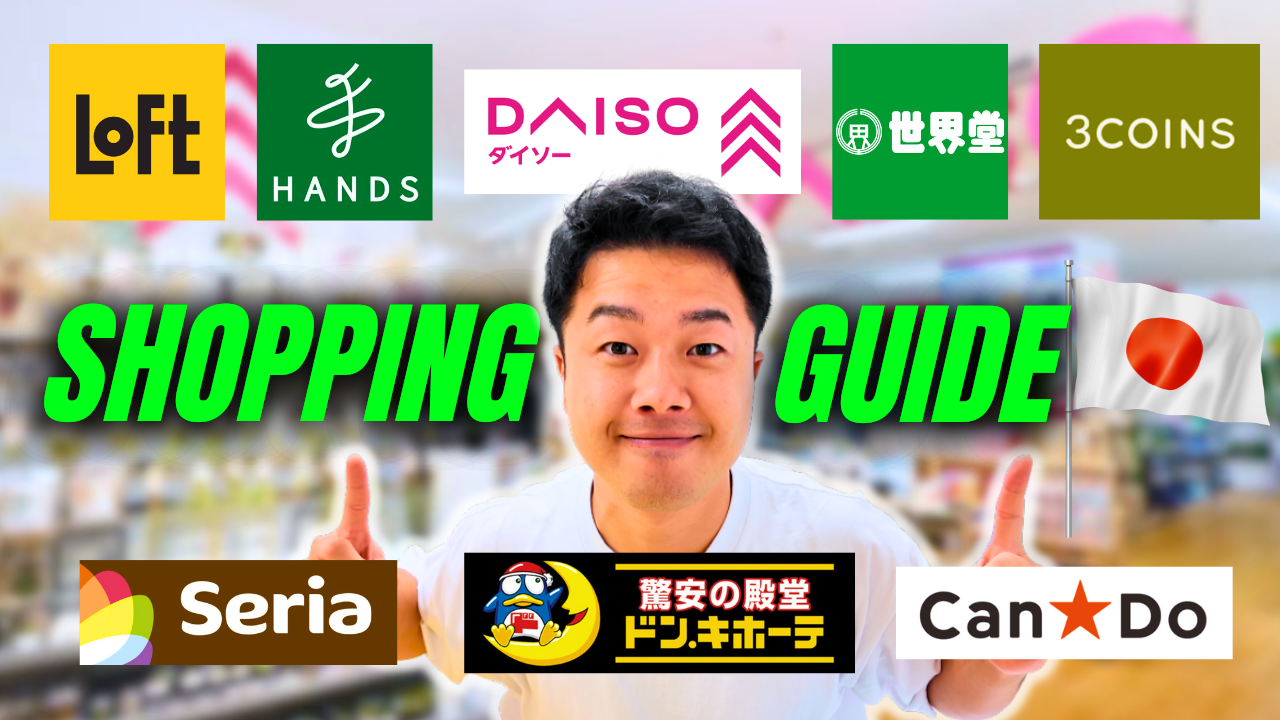
When shopping in Japan, you do not need to spend a fortune at luxury boutiques to take home world-class products. For just 100 yen (roughly 70 cents USD), you can find exceptionally engineered daily goods, clever travel gadgets, and legendary stationery that would easily cost ten dollars or more back home.
However, not every discount shop is built the same. To the untrained eye, budget chains look nearly identical from the street, but locals know that each brand has a distinct specialty, quality tier, and aesthetic.
Here is the local playbook to mastering Japan’s 100-yen stores, lifestyle boutiques, late-night souvenir halls, and wholesale stationery wonderlands without wasting time or suitcase space.
The Budget Paradise: Understanding Chain Personalities
Navigating Tokyo’s discount scene efficiently comes down to matching your shopping list with the right store profile.
DAISO: Pure Utility and Practical Travel Gear
DAISO is the undisputed titan of Japan’s 100-yen industry, with thousands of locations nationwide.
- The Vibe: High-density, utilitarian, and focused entirely on problem-solving.
- What It Excels At: Heavy-duty vacuum compression bags for shrinking clothes in your luggage, replacement charging cables, travel-sized toiletries, and clever kitchen tools.
- When to Go: Visit a mega-flagship DAISO on your first morning in Japan to grab functional items that make living out of a suitcase easier.
Seria: Minimalist Aesthetics and Scandinavian Design
If DAISO prioritizes sheer function, Seria is built around visual presentation and interior styling.
- The Vibe: Clean, calm, boutique-like design.
- What It Excels At: High-quality ceramics, Japanese-style tableware, matte-finish organizers, and tasteful gift-wrapping supplies.
- Why Locals Love It: Products look like they were purchased from an upscale lifestyle boutique rather than a budget store, making it the best spot for elegant home decor on a dime.
Can★Do: Character Collabs and Quirky Problem Solvers
Can★Do has carved out a massive following through official pop-culture partnerships and niche household fixes.
- The Vibe: Playful and trend-driven.
- What It Excels At: Officially licensed Sanrio merchandise (Hello Kitty, Cinnamoroll, Kuromi) sold at standard retail prices rather than theme-park markups. They also carry hyper-specific daily problem solvers that make fun, quirky stocking stuffers.
3COINS: The Premium Step-Up for Everyday Carry
While not a 100-yen shop, 3COINS prices most of its inventory at 300 yen (around 2 USD).
- The Vibe: Sleek, muted, modern lifestyle essentials for adults.
- What It Excels At: Heavy-duty packing cubes, minimalist tech cable pouches, clean jewelry organizers, and stylish kitchen accessories.
- The Verdict: It serves as the ideal bridge between standard plastic discount goods and high-end department store accessories.
Don Quijote: The Midnight Souvenir Mecca
Don Quijote (universally referred to as Donki) is less of a typical retail outlet and more of a multi-story, neon-drenched shopping experience that operates late into the night.
The Late-Night Bulk-Buy Strategy
Do not burn sunny daytime hours wandering through retail stores when you could be exploring shrines, gardens, or neighborhoods. Instead, hit Donki after 11:00 PM when daytime crowds disperse.
- One-Stop Souvenir Run: Finish your entire edible souvenir list in a single session. This is where you grab bulk regional snack boxes (Matcha KitKats, Tokyo Banana collabs), packaged Ichiran Ramen sets, Japanese potato chips, and daily cosmetics.
- Navigating the Maze: Donki aisles are intentionally designed as dense labyrinths to encourage impulse browsing. If you lose your bearings, look directly up at the ceiling signs, which clearly point the way toward central escalators, cash registers, and tax-free desks.
🗺️ Need Turnkey Routes & 1-Tap Google Maps Pins?
Check out our complete 119-page handbook crafted by a Tokyo native—featuring 5-day itineraries and offline navigation.
See What’s Inside the Guidebook →Japanese Stationery: High-Precision Design
In Japan, stationery engineering is approached with serious artistic discipline. Writing instruments are designed for seamless ink flow, and paper is crafted to prevent feathering or bleeding.
The Major Curated Flagships: LOFT and HANDS
Both LOFT and HANDS function as multi-floor design department stores. They feature vast, meticulously organized stationery floors showcasing the newest pen releases, personal planners, and smart desktop accessories.
The Insider Secret: SEKAIDO (Shinjuku)
While tourists flock to department stores, artists, architects, and design students head straight to Sekaido in Shinjuku.
- The Reality: A true wholesale supplier packed with thousands of pens, markers, inks, and notebooks across multiple floors.
- The Advantage: You can purchase top-tier Japanese writing instruments and notebooks at genuine wholesale discounts well below standard retail pricing.
Four Legendary Stationery Items to Buy
- Uni Kuru Toga Mechanical Pencil: Engineered with an internal ratchet gear that rotates the lead slightly each time it touches the paper, keeping the point continuously sharp without flattening on one side.
- Pilot FriXion Series: High-performance erasable gel pens that wipe away cleanly using heat generated from the integrated rubber tail tip. Leaves zero eraser dust and causes no surface abrasion on paper.
- Kokuyo Campus & Life Noble Notebooks: Paper milled to a silky, ultra-smooth texture that eliminates fountain pen bleed and ballpoint drag.
- Miniature Puzzle Erasers: Realistic novelty erasers molded into scale-model sushi platters, bento boxes, and street signs that disassemble piece by piece.
Critical Shopping Pitfalls to Avoid
The Premium Price Tier Mix-In
At large multi-story flagships of DAISO or 3COINS, not every single item costs the base price. Stores regularly stock higher-grade home goods priced at 200, 500, or 1,000 JPY. Inspect the packaging for a bold price sticker before tossing items into your basket. If there is no explicit price tag, it is the base price.
Luggage Weight Limits and Carry-On Liquids
Bulk purchases of soy sauces, instant ramen bowls, and heavy ceramics add up quickly on airline baggage scales. Furthermore, any liquid, paste, or gel purchased at a discount store must go into checked luggage. If you attempt to carry 100-yen skincare lotions or hair products through airport security checkpoints, they will be confiscated under international liquid carry-on rules.
Consolidating for Tax-Free Thresholds
To qualify for tax-free exemptions (10% off), your purchase must reach a minimum of 5,000 JPY (pre-tax) in a single transaction at a registered store. Avoid buying a few small items at five different neighborhood corner shops. Instead, consolidate your shopping list into one single visit at a major flagship location with your physical passport in hand.
The Efficient 3-Step Shopping Timeline
- Day One Morning: Visit a large flagship DAISO or 3COINS in a hub like Shinjuku or Shibuya to stock up on vacuum bags, tech organizers, and travel supplies
- Mid-Trip Afternoon: Take an hour to explore the stationery floors at LOFT, HANDS, or Sekaido to pick up curated notebooks and high-grade pens for gifts.
- Final Night (Post-11:00 PM): Complete your late-night bulk run at Don Quijote to pack the remainder of your checked baggage with snacks, packaged noodles, and beauty items.
Thanks for reading until the end!! Be sure to check out my Ultimate Japan Guidebook!! 👇

Comments